⚙️

Total Weight

6.3 kg

📏

Arm Length

60 cm (12 segments)

🔄

Rotation Range

135° coverage arc

📐

Height Adjust

10 cm range

⏱️

Setup Time

< 2 minutes

Success Rate

100% (10/10 trials)

Circadian Rhythm Regulating Device

A Mechanical Wake-Up Solution Using Physical Stimulation to Enforce Healthy Sleep Schedules

🎯 Project Overview

Traditional alarm clocks fail 43% of users who develop snooze habits, leading to unhealthy sleep cycles. The Circadian Rhythm Regulating Device eliminates the snooze option through gentle physical stimulation—tickling combined with water spraying—forcing users out of bed.

This ME 101 team project features a rotating arm with paintbrush end effector, ultrasonic sensor for presence detection, and gravity-fed water system, all controlled by an EV3 microcontroller.

🔑 Need Statement

"A need exists to develop a mechanical solution that enforces wake-up routines while ensuring safe user operation."
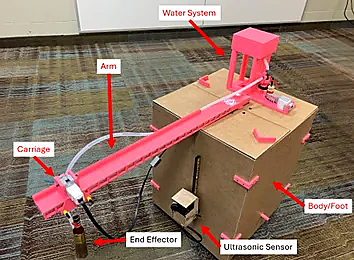
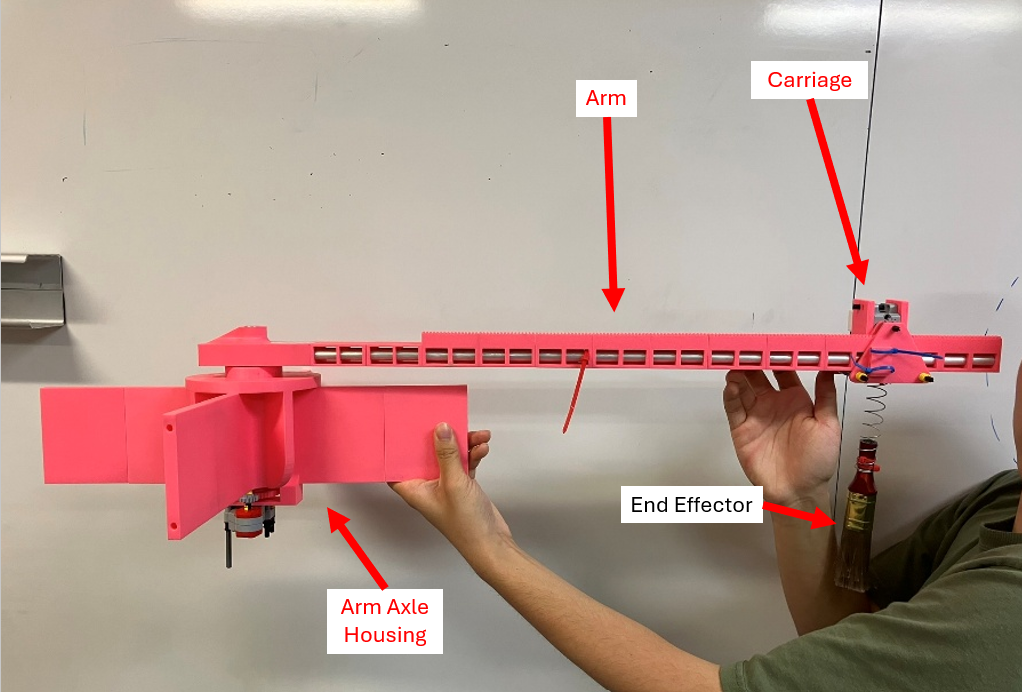
📸 Design & Development Gallery

Explore the mechanical systems, CAD designs, and testing process behind the Circadian Rhythm Regulating Device.

My Contributions

🖥️ Design & Manufacturing

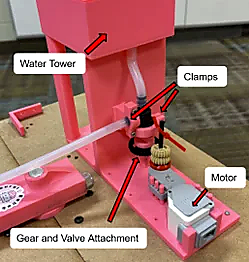
  • Designed water system base in SolidWorks integrating motor mounting, valve holders, gear housing, and elevated water tower—ensuring proper component spacing and structural integrity
  • Engineered pin-based height adjustment mechanism inspired by gym weight stacks, providing 10cm adjustment range (2× specification) with simple user operation, stable locking, and custom spacers preventing pin wobble
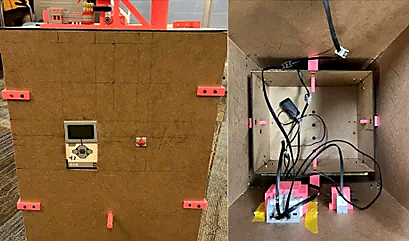
  • Created 3D models for critical components including valve-gear connector with specialized geometry, screw-on clamps for valve mounting, and ultrasonic sensor enclosure with precise LEGO-compatible mounting
  • Executed fabrication using laser-cut HDF sheets and 3D printed all custom components with optimized settings, assembling complete water system with zip-tie reinforcement and incorporating 10lb foot weight for stability against arm torque

💻 Software Development & Integration

  • Programmed valve control function in RobotC implementing motor rotation with encoder-based position tracking ensuring precise 90° valve actuation based on Boolean state parameter
  • Developed robust error handling and state management ensuring valve returns to known positions and preventing water system failures during multi-phase operation
  • Integrated valve control into larger program flow coordinating with arm motion, sensor inputs, and phase transitions for seamless wake-up cycle execution
  • Led full device integration combining all four major subsystems (arm, housing, water, body) and contributed to system-level debugging resolving mechanical-software integration issues

🔬 Testing & Team Collaboration

  • Conducted comprehensive water system leak testing under various conditions including continuous flow, rapid valve cycling, and extended duration tests—implementing improvements based on observed failure modes
  • Performed component fit verification and full-system user testing trials collecting data on setup time, safety, and device performance across diverse body types and sleeping positions
  • Coordinated closely with teammates on arm design, housing systems, and software development to ensure compatible interfaces and integrated functionality throughout the project
  • Maintained organized work breakdown structure tracking water system tasks: design (3 hrs), CAD (3 hrs), assembly (4 hrs), programming (1.5 hrs), and testing/refinement (2 hrs)

💡 Design Journey

From concept to validated prototype - solving the chronic snooze problem

01
🎯

Needs Analysis & Concept Development

User Research Decision Matrix Morphological Matrix

💡 Key Insight: Research showed 43% of British adults snooze regularly, disrupting circadian rhythms. Using a decision matrix, the rotating arm concept scored highest for user convenience, fabrication ease, and cost versus complex gantry alternatives.

02
📐

Mechanical Design & CAD

SolidWorks Mechanism Design DFM Analysis

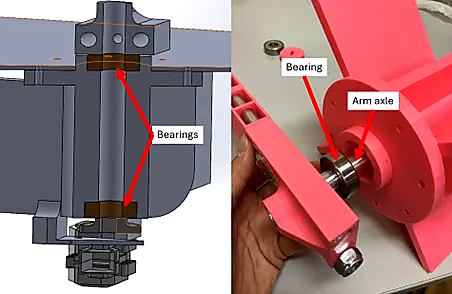
💡 Key Insight: Modular 5cm PLA segments with LEGO-compatible rack teeth replaced expensive machined arms—reducing cost to under $10 while enabling rapid fabrication and variable length. Bearing-supported housing reduced friction dramatically, requiring minimal motor power.

03
💻

Software & System Integration

RobotC Programming Sensor Integration Motor Control

💡 Key Insight: Gear backlash caused encoder inaccuracy. Solution: physical bumpers for mechanical constraint plus time-based software control—a hybrid approach proving more reliable than encoders alone. Multi-phase state machine enabled touch sensor interruption at any cycle point.

04
🔬

Testing & Validation

User Testing (n=10) Safety Validation Performance Metrics

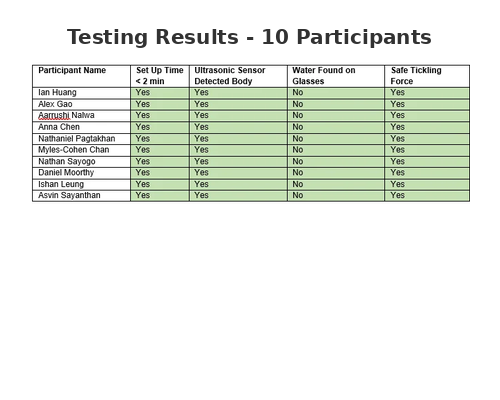
💡 Key Insight: Perfect compliance across 10 diverse participants: 100% safe force, zero eye contact, sub-2-minute setup, 100% sensor accuracy. Physical specs exceeded requirements: 6.3kg (37% under limit), 135° rotation (60cm vs 40cm required), 10cm height adjustment (2× spec). Paintbrush superior to feather—stiff yet safe with naturally ticklish bristles.

Loading Video...