๐ŸŽก
๐ŸŽก

Wheel Type

Gravity-Driven Ferris Wheel

โš™๏ธ

Mechanism

Passive Lift & Release

๐ŸŽฏ

Objective

Ball Transport & Delivery

โฌ‡๏ธ

Power Source

Falling Mass (Gravity)

๐Ÿงฑ

Materials

Tetrix + Cardboard

โฑ๏ธ

Operation

Fully Mechanical

Gravity Ferris Wheel Transport System

A purely mechanical, gravity-powered system for lifting and delivering ping pong balls

๐ŸŽฏ Project Overview

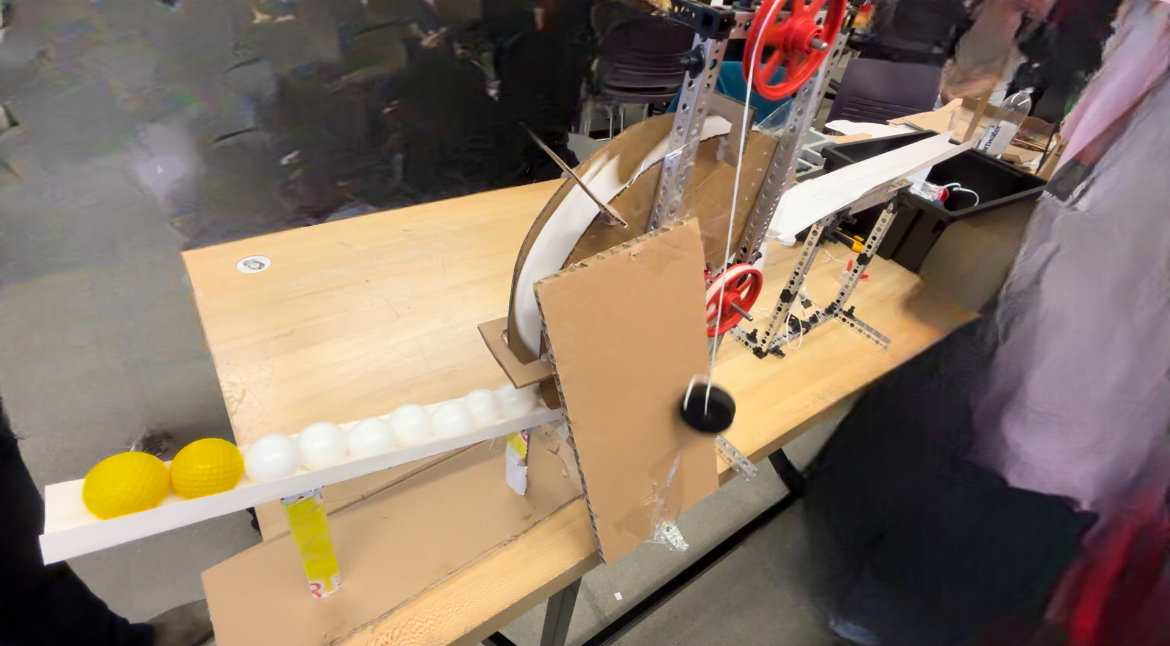
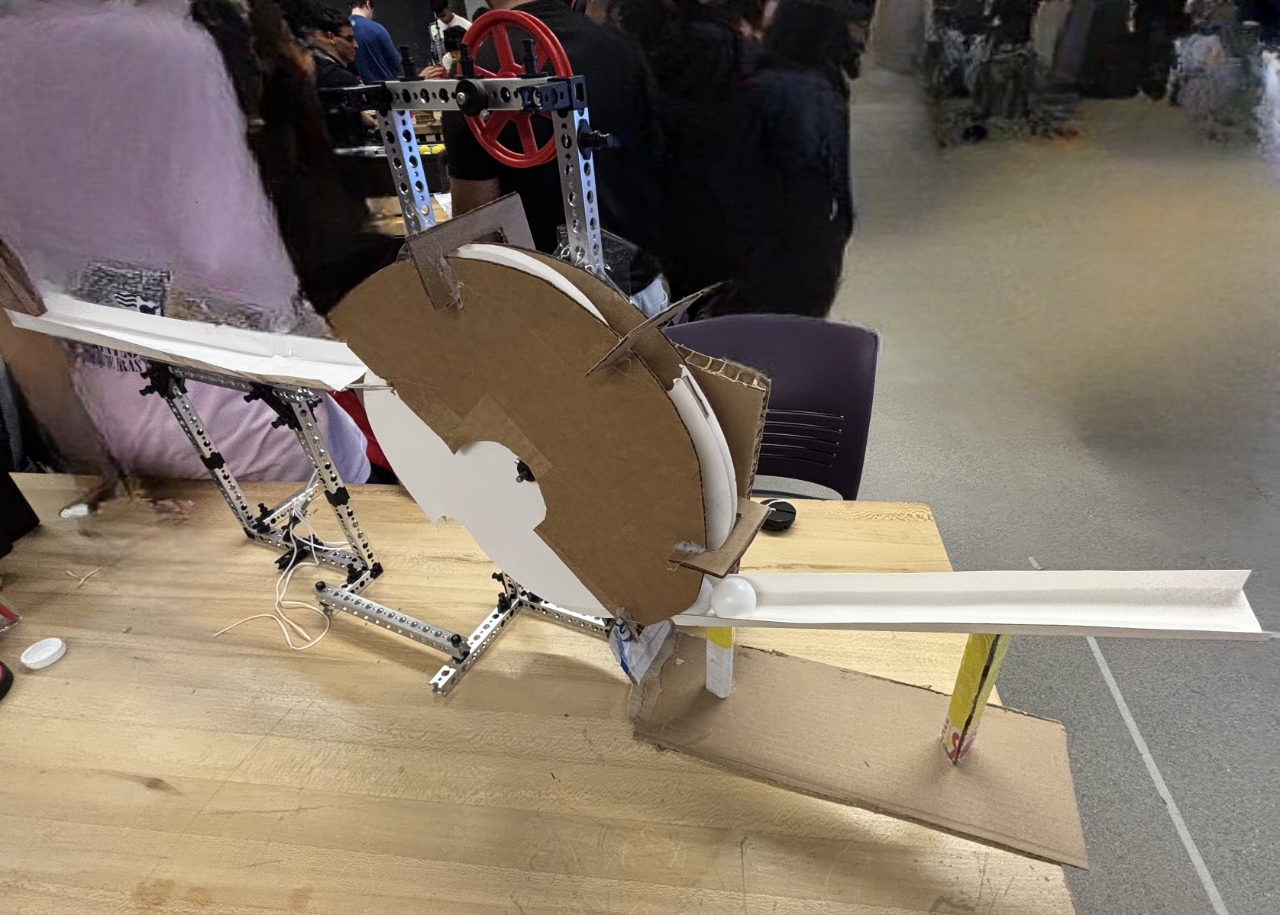
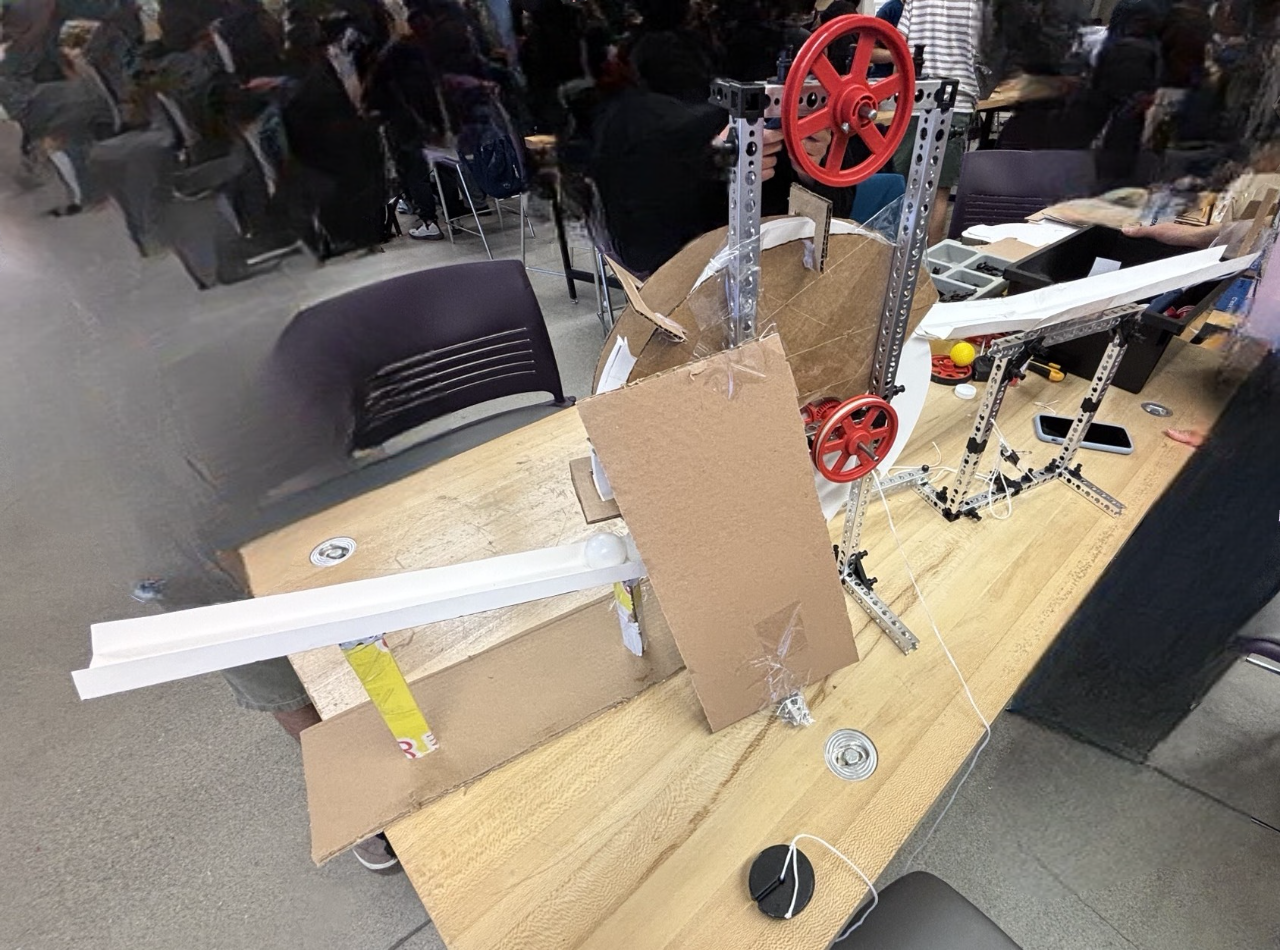
This project is a gravity-powered mechanical system designed to lift and transport ping pong balls using a rotating Ferris-wheel-style mechanism. The system operates without motors, electronics, or active control, relying entirely on the gravitational potential energy of a falling mass.

As the wheel rotates, curved cutouts capture balls at the base, lift them upward, and passively release them near the top onto a sloped exit ramp. The design emphasizes mechanical simplicity, geometric timing, and energy efficiency, demonstrating how controlled motion can be achieved using only gravity and mechanical design.
๐Ÿ“ธ Project Gallery

This gallery documents the design evolution, fabrication process, and final demonstration of the gravity-powered Ferris wheel mechanism.

๐ŸŽก Design, Build & Testing

From early hand sketches to full-scale testing during Mechanical Engineering Design Days.

โšก My Contributions

๐Ÿ”ง Mechanical Design & Fabrication

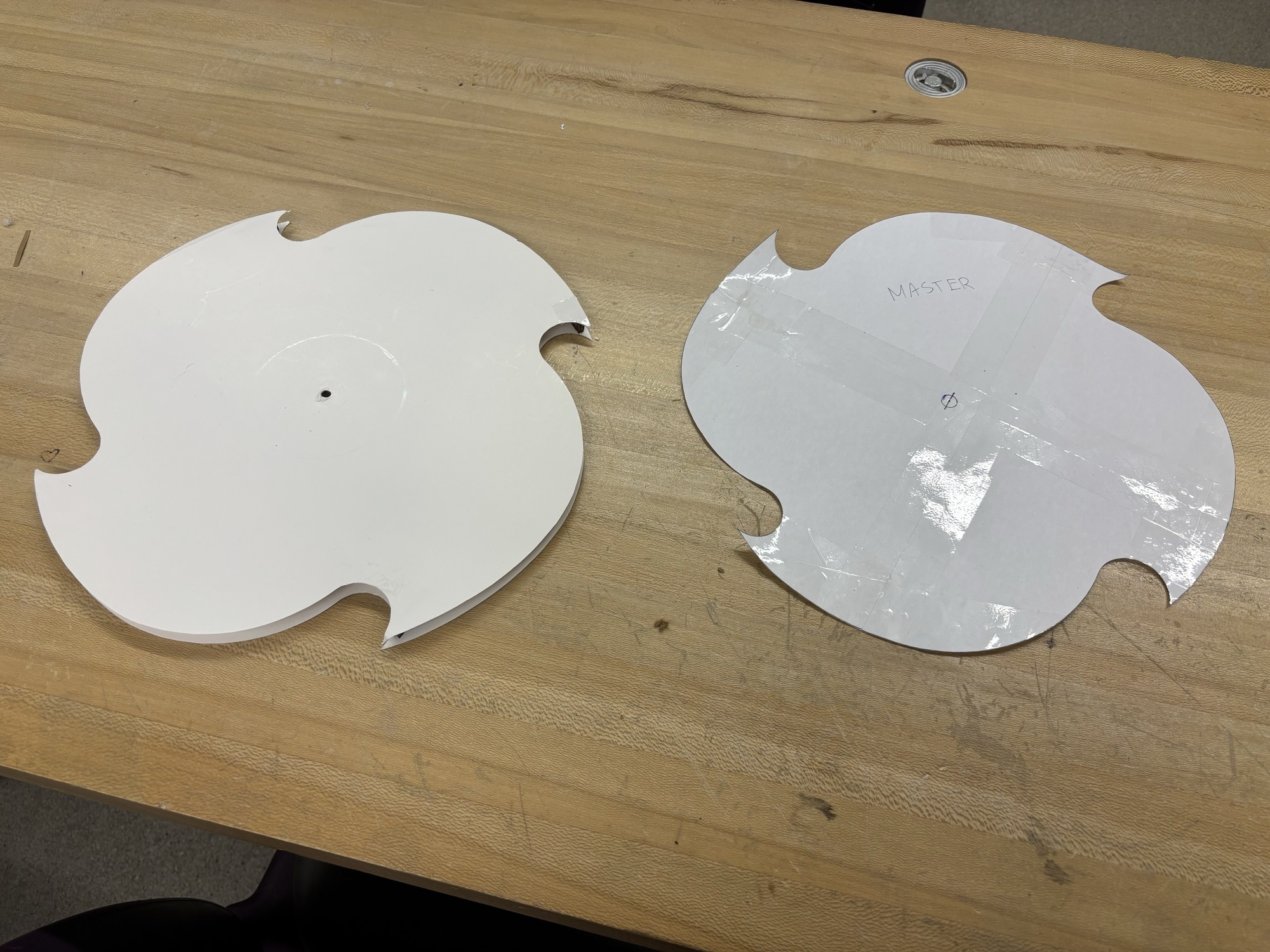
  • Designed the Ferris wheel profile with curved cutouts for ball retention and timed release.
  • Prototyped multiple wheel iterations in cardboard to quickly refine pocket shape, spacing, and release point.
  • Built and reinforced the wheel assembly (two-layer disk + center hub) to improve stiffness and reduce wobble.
  • Assembled the Tetrix frame supporting the wheel, axle, pulleys, and ramp with careful alignment for smooth rotation.

โš™๏ธ Energy Transfer & Motion Control

  • Implemented gravity-powered rotation using a falling mass and string-and-pulley drive system.
  • Selected and tuned mass values to balance rotational speed, lifting strength, and release consistency.
  • Improved energy efficiency by minimizing friction at the axle and reducing string rubbing through rerouting and spacing.
  • Stabilized motion by correcting wheel balance and adjusting load placement to reduce vibration during faster runs.

๐Ÿ”ฌ Testing & Iteration

  • Ran repeated trials to identify jamming, early release, over-launching, and ramp misalignment issues.
  • Adjusted wheel pocket geometry and ramp angle/height to improve ball capture and reduce bounce-outs.
  • Validated consistency by testing under different loads and observing performance changes across multiple cycles.
  • Documented key failure modes and proposed next-step fixes (better axle support, guided ramp walls, cleaner release edge).

๐Ÿ’ก Design Journey

01
๐Ÿ’ก

Concept & Constraint Planning

Concept Design Mechanism Selection Constraints Sketching

๐Ÿ’ก Key Insight: The biggest challenge was achieving reliable ball transport with no motors. A Ferris-wheel-style lifter stood out because it naturally combines three stepsโ€”capture, lift, and releaseโ€” using only geometry. Early sketches focused on pocket shape, ramp placement, and how to use a falling mass to drive smooth rotation.

02
๐Ÿ”ง

Build & Structural Assembly

Tetrix Assembly Alignment Rigidity Rapid Prototyping

๐Ÿ’ก Key Insight: Small alignment errors caused big performance issues. The wheel needed to stay rigid and centered so the pockets could meet the ball smoothly at the bottom and drop cleanly onto the ramp at the top. Reinforcing the wheel and squaring the Tetrix frame reduced wobble and improved repeatability.

03
โš™๏ธ

Gravity Drive & Motion Tuning

Energy Transfer Pulley System Friction Reduction Speed Control

๐Ÿ’ก Key Insight: More weight did not always mean better performance. Higher loads increased rotation speed, but also increased bounce-outs and inconsistent releases. Tuning the falling mass, reducing string slip, and lowering friction at the axle helped keep the wheel rotating smoothly without โ€œlaunchingโ€ the balls.

04
๐ŸŒŸ

Testing, Failure Modes & Iteration

Testing Failure Analysis Iteration Performance Tuning

๐Ÿ’ก Key Insight: Consistency came down to controlling the handoff between wheel and ramp. Most failures happened during capture (jamming) or release (ball bouncing out or missing the ramp). Iterations focused on refining pocket geometry, adjusting ramp angle/position, and improving axle support to reduce tilt during rotation.

Loading Video...